
Published October 28, 2026
Warning Signs You Need a Chimney Sweep in Wykagyl NY Before Winter Hits
Most Wykagyl homeowners don’t think about their chimney until something goes wrong. According to the National Fire Protection Association, failure to clean chimneys is the leading contributing factor in home heating fires in the United States. If your fireplace or wood stove has been sitting idle since last spring, the signs below tell you whether you need a chimney sweep in Wykagyl NY now, or whether you have a little more time.
Why Timing Matters in Wykagyl
Wykagyl’s housing stock skews older. Many of the colonials and center-hall homes along the streets feeding into North Avenue were built in the mid-twentieth century, and their masonry chimneys have been through decades of the freeze-thaw cycles that Westchester winters reliably deliver. By October, our schedule fills quickly with calls from homeowners across New Rochelle, Pelham, and Pelham Manor who waited until the first cold snap. Booking a sweep and inspection in August or September typically costs less and gets your system certified before you need it.
Waiting has a real price. A standard chimney sweep in 2026 runs roughly $150 to $250 for a Level 1 inspection and cleaning. Catch a cracked flue tile or a failing damper early and a straightforward repair might run $300 to $600. Find that same problem after water has worked through the liner over a second winter and you could be looking at a full relining job, which typically starts around $2,500 and climbs from there depending on flue length and liner material.
Signs That Mean Call Us Now
1. A strong, oily or smoky smell when the fireplace isn’t in use
This is creosote off-gassing. Creosote builds up in layers on the flue walls every time you burn wood, and when summer humidity warms it up the smell moves through the house. Third-degree creosote, the glazed tar-like stage, is dense, highly flammable, and much harder to remove than earlier-stage deposits. According to the Chimney Safety Institute of America, third-degree creosote requires specialized removal techniques beyond a standard sweep and should be addressed before any fires are lit. If the smell is heavy, don’t wait.
2. Black or brown staining on the firebox walls or smoke chamber
Some light soot discoloration is normal. Heavy, oily, dark staining, especially above the damper or on the smoke shelf, points to incomplete combustion and creosote accumulation. A homeowner in Wykagyl called us last September after noticing a thick black crust coating the upper firebox that had never been there before. When our technician ran a camera inspection, the upper flue tiles showed Stage 2 creosote that had built up over two winters of unseasoned wood. That system needed a full cleaning before it was safe to use.
3. Smoke backing into the room when you open the damper
Some backdraft on startup is common, but if smoke consistently rolls into the living space after the fire is established, you have a draft problem. It could be a blocked or damaged flue, a damper that won’t open fully, or a negative-pressure issue in the house. Any of these conditions pushes carbon monoxide into the living space along with the smoke. This is a call-now situation.
4. You can see daylight through the firebox top or hear birds or wind
If you look up through the open damper and can see sky, that’s fine. What isn’t fine is hearing scratching, chirping, or rustling, which usually means birds or squirrels have nested in the flue. Animal nesting material is dry, fibrous, and sits directly in the path of combustion gases. It’s also a blockage that can cause carbon monoxide to back up into the home. NFPA 211, the standard that governs chimney systems, requires that flues be free of obstructions before use. A chimney cap installation, part of our standard service, resolves this going forward.
5. White staining (efflorescence) on the outside of the chimney
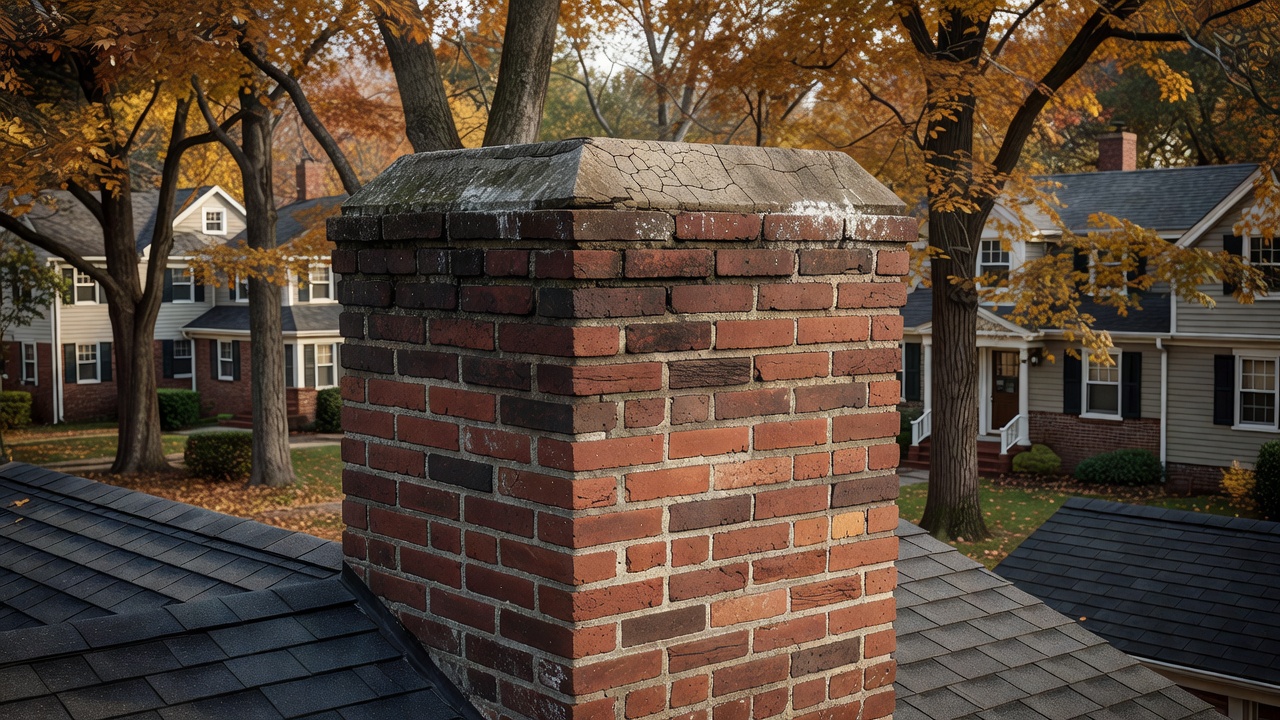
Those chalky white streaks on brick aren’t just cosmetic. Efflorescence happens when water moves through the masonry and carries mineral salts to the surface. It tells you water is getting in somewhere, whether through a failed crown, cracked mortar joints, or a missing or deteriorated flashing seal. Left alone through another Westchester freeze-thaw season, that water migration will crack bricks and spall the mortar faster than most homeowners expect. Our masonry repair team handles this regularly for homes in Beechmont and Fleetwood.
6. Visible cracks in the chimney crown or mortar joints
Stand back and look at the crown, the concrete or mortar cap that sits on top of the chimney. Hairline cracks are the beginning; wide gaps mean water is already pooling and working its way into the flue system. Cracked mortar joints between bricks are equally serious. Water freezes inside those gaps, expands, and does what it does to masonry: chiseling the joints wider with every cycle. This is a watch-closely situation if the cracks are hairline, and a call-now situation if you can fit a coin in the gap.
7. A damper that’s stuck, rattles, or won’t seal completely
A damper that doesn’t close all the way leaks conditioned air year-round and lets cold drafts drive down the flue in winter. More importantly, a stuck or warped damper can restrict airflow during a fire in ways that aren’t immediately obvious. If you hear a rattle during windy weather or feel a draft with the damper supposedly closed, it needs attention before you light a fire.
8. It’s been more than a year since your last sweep and inspection
According to NFPA 211, chimneys should be inspected at least once a year, whether or not you use the fireplace regularly. A system that sat unused all season can still have developed mortar cracks, animal intrusion, or moisture damage that won’t show up until there’s a fire in the firebox. Annual service isn’t a upsell. It’s the minimum the standard requires.
Signs You Can Monitor Closely but Don’t Require Emergency Service
Light, powdery soot on the firebox floor, a faint musty smell that clears when you open a window, or a small cosmetic crack in the exterior brick near the roofline are all worth noting and bringing up at your next scheduled service. They aren’t reasons to stop using your fireplace today, but they do mean you shouldn’t push your annual appointment past early fall.
Homeowners in Mount Vernon and Rochelle Heights often ask us whether they can sweep their own chimney. Brushing the flue yourself with a DIY kit can dislodge loose soot, but it won’t catch a cracked tile, a failing liner, or the early signs of Stage 2 creosote. A trained technician uses a video camera and knows what the NFPA 211 inspection levels require, which is documentation you’ll also want if you ever need to make a homeowner’s insurance claim.
What to Expect When You Book
When our team arrives at your Wykagyl home, we start with a visual assessment of the exterior crown, flashing, and cap before we come inside. We run a drop cloth, use commercial-grade equipment to contain the mess, and provide an itemized report of any conditions found. If we identify a problem, we explain it in plain terms and give you a written estimate before any repair work begins. No surprises on the invoice.
If you’ve spotted any of the signs above, or it’s simply been a year since your last service, reach out to us through the contact form on our website. We serve Wykagyl and the surrounding neighborhoods across Westchester County and can usually schedule an appointment within a week or two during the late-summer window, well before the fall rush begins.
Frequently Asked Questions
How often should I schedule a chimney sweep in Wykagyl NY?
NFPA 211 recommends a professional inspection at least once per year. If you burn wood regularly through a Westchester winter, an annual sweep before the heating season is the right schedule. Light users, meaning one or two fires a month, still need the annual inspection even if a full cleaning isn’t required every single year.
What does a chimney sweep cost in Wykagyl in 2026?
A standard Level 1 inspection and cleaning typically runs $150 to $250 for a single flue. Pricing varies based on flue height, the degree of creosote buildup, and whether any repairs are needed. We provide an itemized written estimate before any work begins.
Is it safe to use my fireplace if I smell something musty?
A faint musty odor can mean moisture in the flue or early-stage creosote off-gassing. We’d recommend having the system inspected before using it, especially if the smell is strong or oily. A strong, petroleum-like odor is a sign of heavy creosote buildup and the fireplace should not be used until it has been professionally cleaned.
Can birds or animals in my chimney cause a fire?
Yes. Nesting material is dry and sits directly in the flue path. A spark can ignite it quickly. Beyond fire risk, nests block combustion gases and can cause carbon monoxide to back up into the home. Our team removes nests, clears the flue, and can install a chimney cap to prevent reentry.
What is efflorescence on a chimney and should I worry about it?
Efflorescence is the white, chalky staining that appears when water moves through masonry and deposits mineral salts on the surface. It signals active water intrusion. In Westchester’s freeze-thaw climate, water inside the masonry expands when it freezes and accelerates brick and mortar damage. It’s worth having our masonry repair team assess the crown, flashing, and mortar joints before another winter.
Do I need a chimney sweep if I haven’t used my fireplace in years?
Unused chimneys can still develop moisture damage, animal intrusion, and mortar deterioration. A Level 1 inspection, as defined by NFPA 211, is appropriate for any system that has gone unused before you plan to light it again. Skipping this step because the fireplace “hasn’t been touched” is one of the more common reasons we find avoidable damage.
Related from New Rochelle Chimney: Chimney Inspection in New Rochelle, NY · Chimney Repair in New Rochelle, NY