
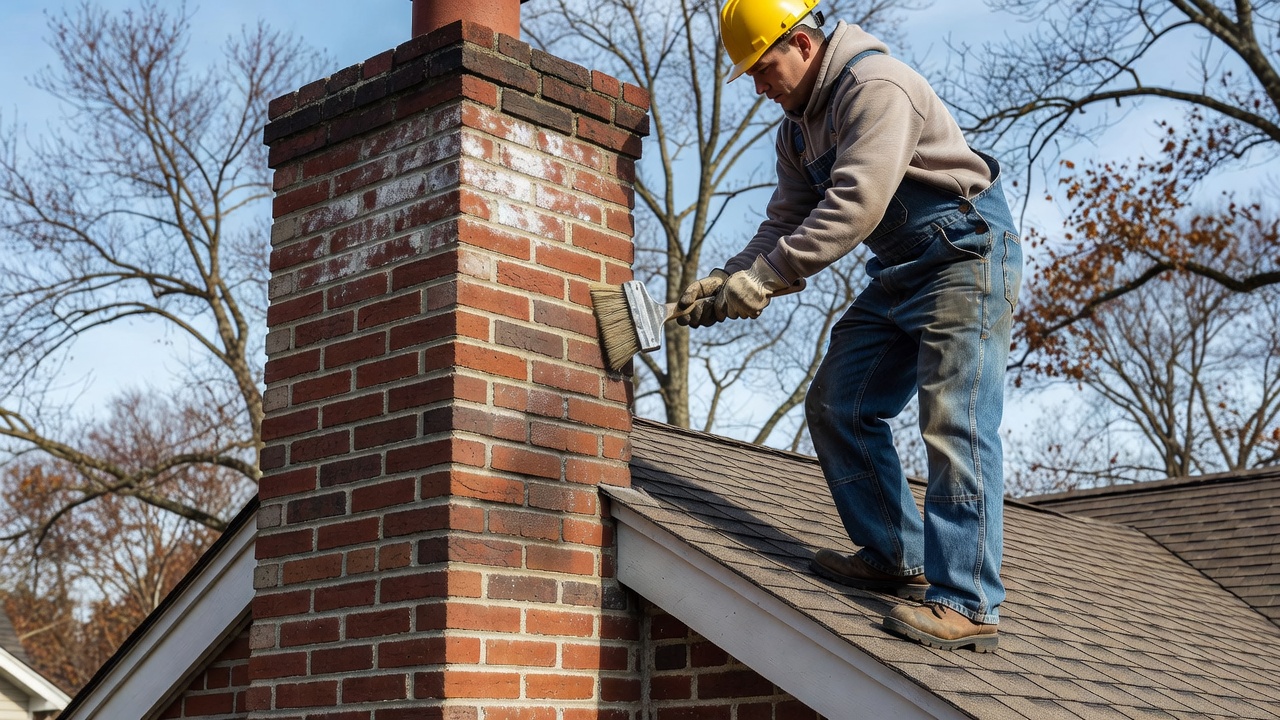
Chimney Waterproofing in New Rochelle NY: The Mistakes That Cost Homeowners the Most
Most people assume a chimney is built to take weather on the chin. It’s masonry, after all. That assumption is one of the most expensive ones we see in our work across New Rochelle NY, and chimney waterproofing is where the consequences show up first. Water is the single biggest source of chimney damage in Westchester County. Between the freeze-thaw cycles we get from December through March and the nor’easters that roll through every few years, a chimney that isn’t properly sealed is quietly deteriorating every season.
A homeowner in Rochelle Heights called us last February after noticing rust stains on the firebox floor and a damp smell coming from the fireplace. She’d had the chimney swept the previous fall and assumed that covered everything. It didn’t. What she had was spalling bricks above the roofline, a cracked crown, and no waterproof sealant on the masonry. The repairs ran into the mid-hundreds of dollars more than a waterproofing treatment would have cost a year earlier. By the end of this post, that kind of outcome will make a lot more sense, and you’ll know how to avoid it.
Below are the questions we hear most often from homeowners across New Rochelle, Pelham, Fleetwood, and Mount Vernon. Each one points to a mistake worth knowing about before you schedule anything.
Your Chimney Waterproofing Questions Answered
Does a new chimney really need waterproofing?
Quick answer: Yes, and sooner than most homeowners expect.
Brick and mortar are porous by nature. A new chimney has no factory sealant on it. In a climate like New Rochelle’s, where temperatures can swing 40 degrees in 24 hours during shoulder seasons, water gets into those pores, freezes, expands, and cracks the masonry from the inside out. According to the Chimney Safety Institute of America (CSIA), water is the leading cause of chimney deterioration, and the damage often begins long before it’s visible from the ground. We recommend waterproofing treatment within the first one to two years on any new masonry chimney, and we reinspect the crown and cap at the same appointment.
Can I use regular masonry sealer from a hardware store?
Quick answer: No. The wrong product can make the problem worse.
This is one of the most common mistakes we encounter on jobs in neighborhoods from Beechmont to Pelham Manor. Standard masonry sealers are often film-forming products. They trap moisture inside the brick instead of letting it escape as vapor. Over one winter, that trapped moisture expands and pops the face off the brick, a process called spalling. Chimney waterproofing in New Rochelle NY requires a vapor-permeable, 100-percent siloxane-based product specifically rated for chimney masonry. These products let the chimney breathe while blocking water from entering. They are not the same as concrete sealers, driveway coatings, or general brick sealants.
What happens if I just let a small leak go?
Quick answer: A small leak rarely stays small through a Westchester winter.
We’ve pulled apart fireboxes in Fleetwood and Davenport Neck where what started as a hairline crack in the crown became a flue liner replacement job by the following spring. Water that enters at the crown or through open mortar joints works its way down the flue, rusts the damper, saturates the smoke chamber, and can damage framing and drywall in the chase below. NFPA 211, the standard governing chimneys and fireplaces current to 2026, notes that deteriorated mortar joints and cracked crowns represent a Class 2 deficiency requiring prompt repair before continued use. Ignoring a leak doesn’t defer the cost; it multiplies it.
How much does chimney waterproofing cost in New Rochelle NY?
Quick answer: Treatment alone typically runs $150 to $350 for a single-flue chimney; add repairs and costs climb.
Pricing varies based on chimney height, number of flues, and the condition of the masonry before we apply anything. A clean, structurally sound chimney on a standard two-story home in New Rochelle might fall in the $200 range for the waterproofing treatment itself. If the crown needs patching or mortar joints need tuckpointing first, expect additional cost for that labor. We provide itemized estimates so homeowners can see exactly what they’re paying for. Bundling waterproofing with our chimney inspection service saves a trip charge and is often the most economical approach, particularly before heating season starts in October.
Is waterproofing the same as a chimney cap?
Quick answer: No. They serve different functions and you need both.
A chimney cap keeps rain, animals, and debris from falling directly into the flue. Waterproofing seals the porous exterior masonry against water absorption. A cap with no waterproofing still leaves the brick and mortar exposed to driving rain and frost. Waterproofing with no cap means every storm drops water straight down the flue opening. We always check cap condition as part of our standard inspection, and for woodburning fireplaces especially, a missing or cracked cap is a fast track to a damaged flue liner. Both items matter, and neither substitutes for the other.
When is the best time of year to waterproof a chimney in New Rochelle?
Quick answer: Late spring through early fall, roughly May through September.
Siloxane-based waterproofing products require dry masonry and air temperatures above about 40°F for proper penetration and curing. In New Rochelle NY, we book the bulk of our waterproofing jobs between May and early October. That window also gives any mortar repair work done at the same visit time to fully cure before the first freeze. We do field some emergency calls in late fall when an inspection reveals an urgent condition, but scheduling in warm months gives the treatment the best chance to perform for its rated five-to-ten year lifespan. Homeowners in Bayberry and Residence Park who wait until November often end up on a spring scheduling queue anyway.
Do I need an inspection before waterproofing?
Quick answer: Yes, always. Sealing over hidden damage doesn’t fix the damage.
Applying waterproofing to a chimney with failing mortar joints, a cracked crown, or a deteriorated flue liner is like painting over rust. The underlying problem continues. According to the CSIA, a Level 1 inspection should precede any chimney waterproofing treatment so that existing deficiencies are identified and repaired first. We see this skipped most often when homeowners hire a general handyman rather than a chimney specialist. Our chimney inspection service covers the exterior masonry, crown, cap, flashing, and accessible flue before we recommend any waterproofing scope. The inspection gives you a baseline and prevents you from sealing in active moisture or structural problems.
What about chimney flashing? Does that affect waterproofing?
Quick answer: Flashing failure is one of the top sources of water intrusion, and no sealant fixes it.
Flashing is the metal seal where the chimney meets the roof. When it separates, rusts, or was installed incorrectly (common on the older housing stock across Premium Point and Wykagyl), water runs straight into the attic and wall cavity regardless of what’s on the masonry surface. Chimney waterproofing in New Rochelle NY addresses the masonry itself; it does not compensate for failed flashing. We assess flashing condition on every inspection visit. If the flashing needs re-bedding or replacement, that work has to happen before or alongside any waterproofing treatment or you’re solving part of the problem and ignoring the rest.
How long does waterproofing last, and what can shorten its life?
Quick answer: Five to ten years is typical, but harsh winters and deferred maintenance cut that down.
Product lifespan depends on application quality, the condition of the substrate, and ongoing weather exposure. In Westchester County, our freeze-thaw cycles are harder on masonry than in warmer climates. Chimneys on north-facing walls or tall structures exposed to wind-driven rain will need reapplication sooner than sheltered ones. Pressure washing the masonry, applying calcium chloride ice melt near the chimney base, and neglecting small crown cracks all shorten the treatment’s effectiveness. We advise homeowners to schedule a visual inspection every two years and a full reapplication assessment after five years. Keeping up with minor mortar repairs through our masonry repair service between waterproofing cycles is the most cost-effective way to extend the life of the treatment.
Summary: Common Mistakes and How to Avoid Them
| Mistake | Why It Happens | How to Avoid It |
|---|---|---|
| Using hardware-store masonry sealer | Assumes any sealant works on brick | Use only vapor-permeable, siloxane-rated chimney product |
| Skipping inspection before waterproofing | Trying to save money on a service call | Schedule inspection first; repair before sealing |
| Relying on a chimney cap alone | Misunderstanding what a cap does | Use cap and waterproofing as complementary measures |
| Ignoring flashing condition | Flashing is out of sight on the roof | Include flashing assessment in every inspection |
| Waterproofing in cold or wet weather | Scheduling is last-minute or urgent | Book May through September for best results |
| Letting a small leak wait | No visible interior damage yet | Act on any sign of moisture before winter sets in |
| Never reapplying after five-plus years | Assuming a one-time treatment lasts forever | Reassess every five years; reapply as needed |
If you’re a homeowner in New Rochelle or anywhere in Westchester County and you’re not certain when your chimney was last inspected or treated, that’s reason enough to schedule a visit. Our team can assess the masonry, crown, flashing, and flue condition in a single appointment and give you a clear, itemized picture of what your chimney actually needs. Reach out through the contact form on our website and we’ll get back to you promptly.
Frequently Asked Questions About Chimney Waterproofing in New Rochelle NY
How do I know if my chimney needs waterproofing right now?
Look for white staining (efflorescence) on the brick, flaking or spalling brick faces, rust on the damper, a damp smell from the firebox, or water marks on the ceiling near the chimney. Any of these signs points to active moisture intrusion. A professional inspection will confirm the source and tell you whether waterproofing treatment, crown repair, or flashing work is the right next step. Don’t rely on appearance alone; a chimney can be absorbing significant moisture before it shows visible exterior damage.
Will waterproofing fix a chimney that already leaks?
No. Waterproofing is a preventive treatment, not a repair. If water is already entering, the source of the intrusion, whether that’s a cracked crown, failed flashing, open mortar joints, or a missing cap, needs to be repaired first. Applying sealant over an active leak traps moisture inside the masonry and typically makes spalling worse over the following winter. Our process always starts with diagnosing and repairing the deficiency before any sealant goes on.
Is chimney waterproofing worth it on an older home?
Generally yes, provided the masonry is structurally sound enough to be worth preserving. Many homes in New Rochelle date from the early-to-mid twentieth century and have original brick that is still in serviceable condition. Waterproofing and periodic tuckpointing can extend that masonry’s life significantly. If the chimney has severe structural deterioration, a rebuild or relining may be the more appropriate investment. An inspection will tell you which situation you’re in before you spend money on the wrong service.
Can chimney waterproofing be combined with other services in one visit?
Yes, and it’s often the most efficient way to manage the work. We routinely combine a Level 1 chimney inspection, crown sealing or patching, cap replacement, and exterior waterproofing treatment in a single appointment. Bundling saves you time and often reduces the overall cost compared to scheduling each service separately. If our inspection identifies a liner issue or damper problem, we’ll document it and discuss repair options with you before any additional work begins.
Does homeowner’s insurance cover chimney water damage in New York?
Coverage varies by policy and insurer. Most standard homeowner’s policies in New York exclude damage resulting from a lack of maintenance, which is how many adjusters classify water intrusion through deteriorated mortar or a cracked crown. Sudden, accidental damage may be covered in some cases. We can provide detailed documentation of the damage and its probable cause for your insurance claim if needed, but we recommend reviewing your policy terms directly with your insurer before assuming coverage applies.
How soon after tuckpointing can I apply waterproofing?
New mortar needs to cure fully before any waterproofing product is applied. Cure time depends on the type of mortar, ambient temperature, and humidity, but a minimum of two to four weeks is a reasonable general guideline for Westchester County conditions in warm months. Applying sealant over uncured mortar prevents proper vapor exchange and can affect how well the mortar bonds. We schedule waterproofing as a follow-up visit after mortar repairs rather than doing both on the same day.
Related from New Rochelle Chimney: Chimney Repair in New Rochelle, NY · Chimney Sweep in New Rochelle, NY